M9 — Museum of the 20th Century
How do you make a century of history something you can touch? M9 in Mestre is a museum of 20th-century Italy. At dotdotdot, I worked on the concept, visual design, and development of three of its installations, each built around a single gesture.
Turn, slide, approach
Turn a printed sports newspaper on rollers, and the screen above follows the page you are reading. Slide a finger along a touch strip to travel through a century of Italian universities. Approach a white bas-relief in a 360° room, and projection brings the religious symbol to life.
My contribution
I designed and developed the newspaper interface, designed the university timeline and its touch slider, and for the projection room led the UX design, created the 3D models, and managed CNC fabrication. Every installation was tested as a lab prototype before it reached the museum.
Team: dotdotdot. Custom rotary encoder: Nicola Ariutti. Projection-room software: Nicolò Cervello.
Turn: a newspaper that drives the screen
I designed and developed the interface in vvvv, synchronizing a PVC-printed sports newspaper on rollers with digital content on an overhead screen. A custom rotary encoder developed by Nicola Ariutti connects the physical movement to the content.
Testing the rotary input and synchronized content in the lab.
The screen follows the position of the physical roller.
Visitors turning the newspaper in the museum.
Slide: a century under your finger
I created an interface comparing the evolution of Italian universities with wider historical trends, using RAI archive footage and statistical data. A capacitive touch slider lets visitors move through the timeline.
A lab prototype connects the touch slider to the timeline’s changing content.
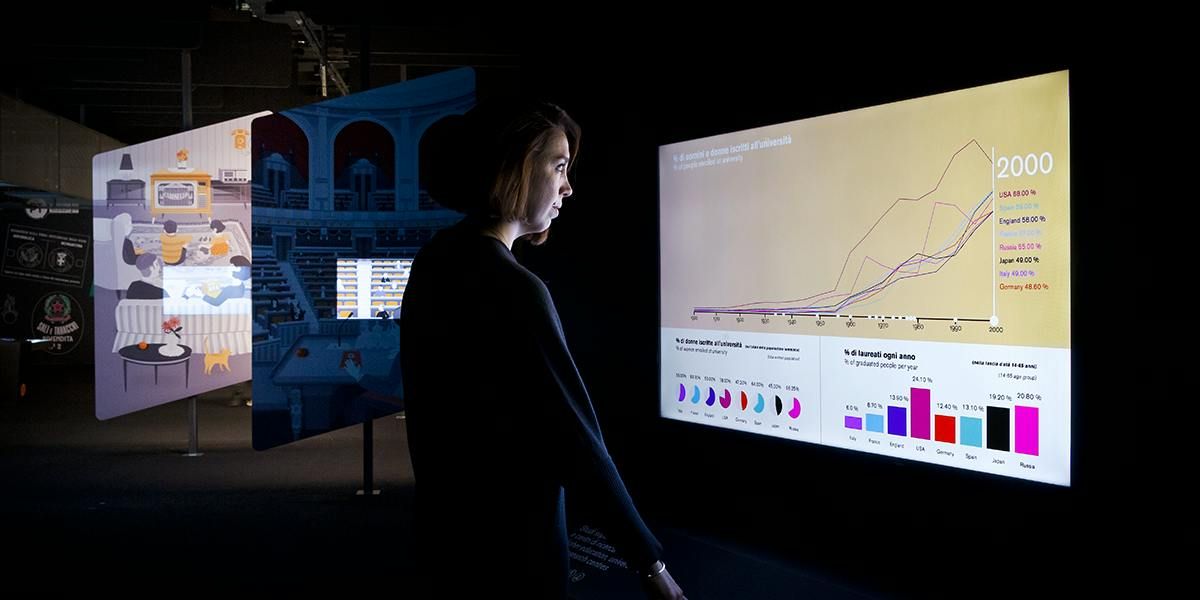
The timeline in the museum, with touch navigation below the screen.
Approach: a room that responds to presence
I co-designed the 360° projection room around white bas-reliefs representing religions in 20th-century Italy. Proximity sensors trigger projected content as visitors approach a symbol.
I led the UX design, supervised software development by Nicolò Cervello, created the 3D models, and managed CNC fabrication.
A proximity-sensing prototype triggers projection onto a bas-relief.
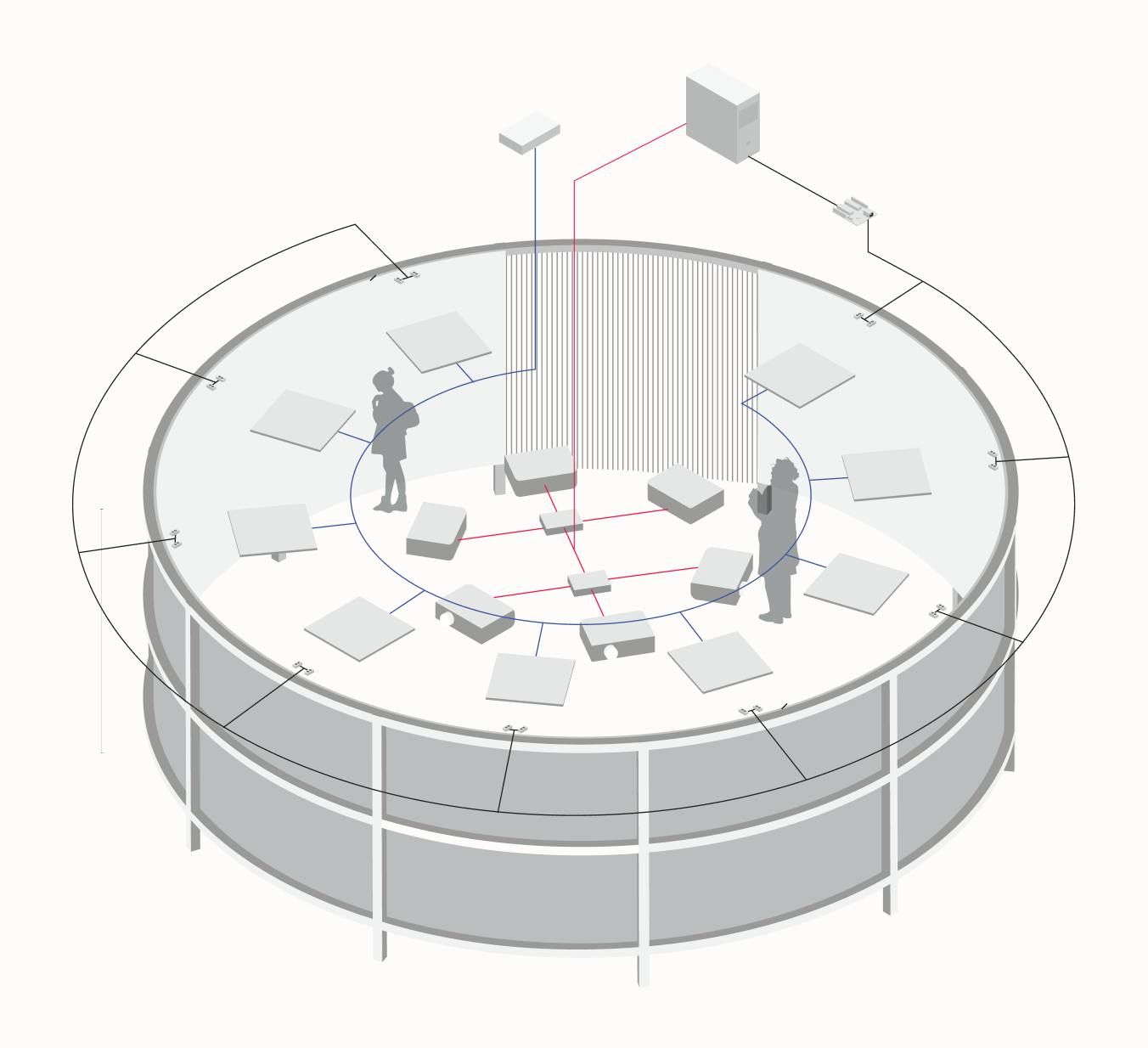
The room layout coordinates visitor movement, symbols, and projected content.
I used displacement maps in Blender to turn the symbols into 3D bas-reliefs suitable for CNC milling.
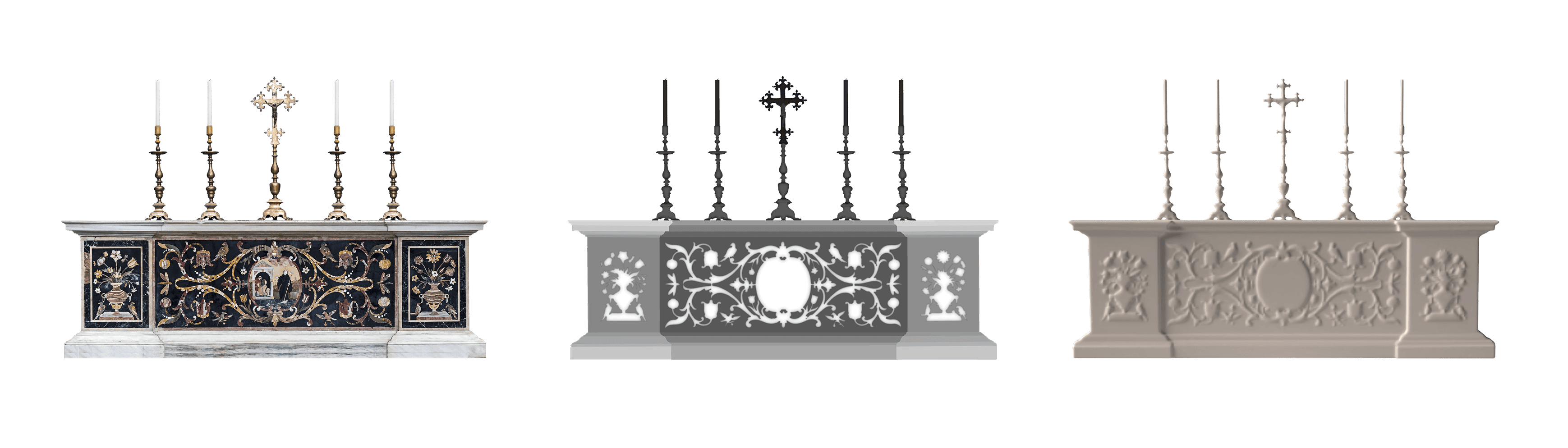
A physical prototype was tested in the lab to refine the projection effect before full fabrication.
CNC milling translates the digital bas-relief model into a physical surface.
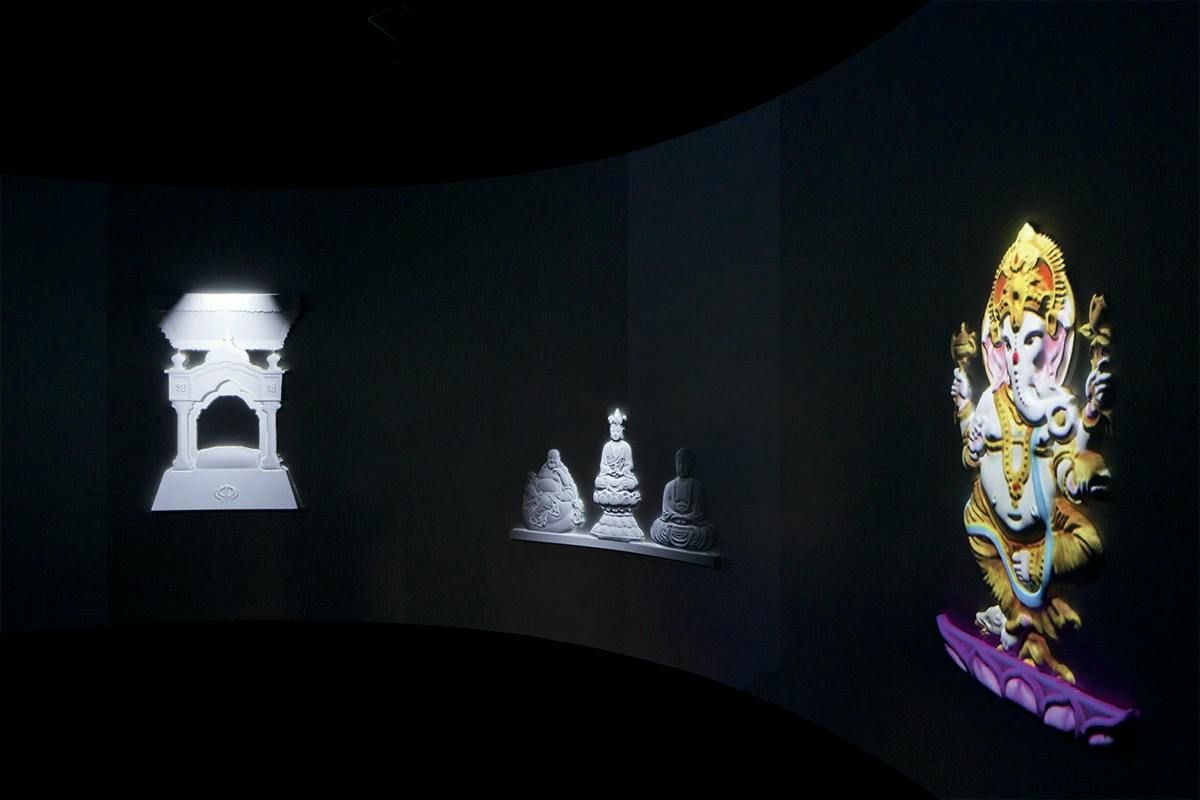
Projected content aligned with the milled relief in the installed room.